
Just two years ago, the future of loyalty was supposed to belong to collectible NFT tokens, and our work was meant to move into digital worlds within the metaverse. Reality, however, failed to keep up with those visions. Mark Zuckerberg’s Meta is drastically cutting its spending on virtual reality, while brands are abandoning digital images in favor of algorithms that can anticipate a customer’s desires before they even express them.
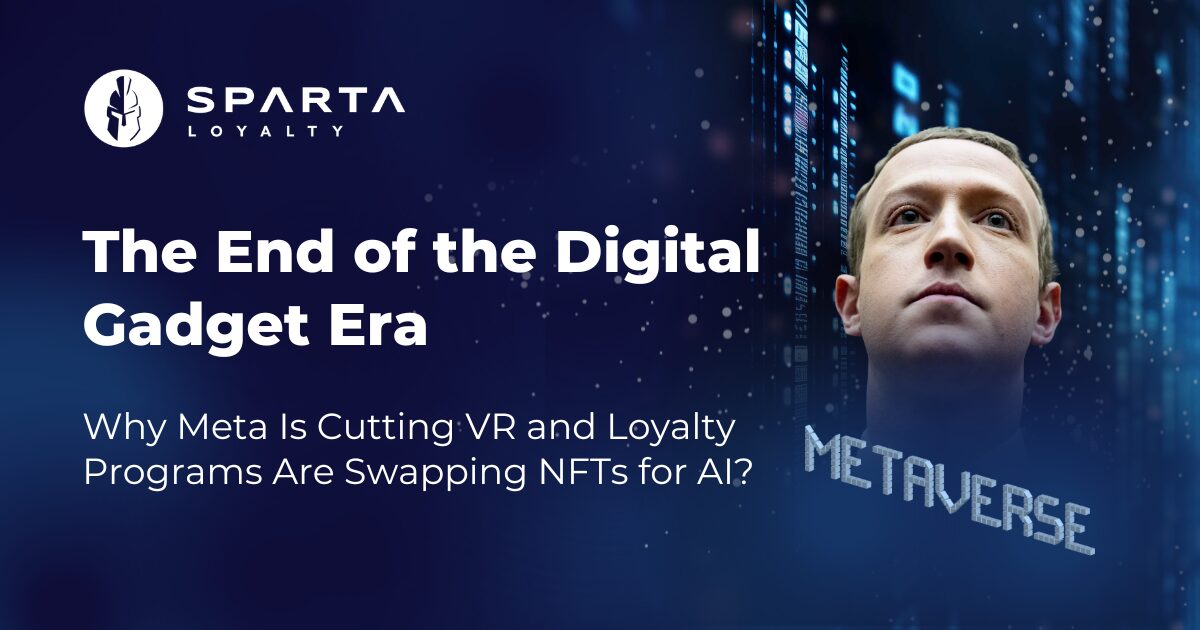
Zuckerberg’s Great Retreat
The beginning of the year brought major changes among tech giants. Meta has decided to lay off between 10% and 15% of staff at its flagship Reality Labs division — a major blow to the metaverse vision. The reason? The numbers don’t lie. According to data published by TechCrunch, the VR division has cost the company over 70 billion dollars in losses since 2020, including as much as 19 billion in 2025 alone.
Instead of building virtual worlds no one wants to inhabit, the tech behemoth is redirecting talent to projects focused on artificial intelligence and wearables such as the Ray-Ban Meta glasses.
“It’s a signal to the entire market – time to stop dreaming about a digital utopia and start creating tools that make life easier here and now. And this isn’t just about social media or the major tech players. It’s a message for every brand that wants to build lasting relationships with consumers. What matters is what brings real value. Nothing more, nothing less,” comments Alex Kubicki, Marketing Director at Sparta Loyalty.
NFT: The Revolution Nobody Wanted
A similar transformation has taken place in marketing. Not long ago, companies were exploring NFT’s potential as a tool for creating exclusive customer experiences. Reality quickly corrected those plans. Reports from Blockeden.xyz paint a grim picture: by 2025, as many as 96% of branded NFT projects had failed.
Even industry giants weren’t immune to collapse. According to Econsultancy, the high-profile Starbucks Odyssey project was shut down because the complexity of blockchain technology discouraged everyday users, and the rewards offered little value beyond conventional loyalty points.
AI Takes the Stage: The Practical Side of Loyalty
Today, instead of giving customers a “unique token,” market leaders turn to hyperpersonalization — using real-time data to deliver offers precisely tailored to an individual, not just a demographic group.
Experts from Sparta Loyalty emphasize that the key to success lies not in the technology itself but in how it simplifies the customer’s life.
“Modern loyalty isn’t about the client understanding technology — it’s about technology understanding the client. AI allows us to move from reactively handing out discounts to proactively building relationships,” adds Kubicki.
How to Use AI in Practice
- Churn prediction: AI can detect when a customer starts “cooling off” and automatically send them an offer to reignite their engagement.
- Dynamic rewards: Algorithms such as Starbucks’ Deep Brew adjust bonuses based on weather, time of day, or shopping history.
- Zero-effort automation: In 2026, fully automated campaigns are becoming a trend — AI autonomously chooses communication channels (email, push, SMS), boosting retention by up to 30%.
- Zero-effort automation: In 2026, fully automated campaigns are becoming a trend — AI autonomously chooses communication channels (email, push, SMS), boosting retention by up to 30%.
AI is completely changing the rules of the game. Instead of flashy but confusing innovations like VR or NFT, it offers operational reliability. In a post–hype-cycle world, the winners are those who stop promising virtual mountains and instead deliver real benefits — instantly accessible from a customer’s smartphone.